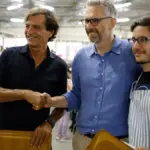







Modena, August 22, 2026 – “Every morning I wake up hoping to read in the newspaper the same article I read when Aldo Moro died. Honestly, if they made you meet the same fate, I believe that you, as a bad man, would deserve it.” Words from a social media hater directed at Massimo Mezzetti, mayor of Modena, whom the citizen accuses of “having destroyed the city.” Mezzetti responded with a long post, announcing a lawsuit, but mainly reflecting on the tendency to turn social media into places where uncontrolled tones and words become the norm.
“And there are also those who like these words”
“I have never had the pleasure or displeasure of knowing him – writes the mayor referring to the author of the text that evokes Moro –. A few days ago he wrote this comment under one of my posts. Facebook automatically hid it, classifying it as violent or threatening content. Apparently not satisfied, its author thought it wise to repost it on his own profile’s wall. A profile in which, moreover, there are other posts with a heavily threatening character towards me and others. Let it be clear: this is not the first time it has happened to me and, I fear, it will not be the last. And it would also be worth reflecting on who puts their “like” under statements of this kind, contributing to legitimizing and spreading them.”
“How can it come to this?”
Complaint incoming. “But I feel pity and unease”
“When I read certain things – continues the mayor – the first feeling I experience is not anger nor resentment. It is rather a mix of pity and unease. I wonder what could lead a person to nurture such a deep hatred as to evoke, towards me, other political figures, or journalists, acts of violence and even of a terrorist nature. Naturally, this gentleman, like others before him, will be reported to the competent authorities in the coming hours. This is not a reaction driven by the desire to intimidate anyone or to prevent criticism, even the harshest. Political criticism is free. Dissent is free. Insults, however unpleasant, unfortunately are part of the price that those in public roles often have to pay.”
The invitation: “Lower the tones and do not fuel hatred”
“Threats and incitement to violence are another matter – Mezzetti points out – And it is precisely for this reason that I keep repeating that everyone, starting with those who have public responsibilities, should contribute to lowering the tones and not fueling feelings of hatred. Words have consequences. The continuous portrayal of the political opponent, the journalist, the administrator, or simply those who think differently as an enemy to hate and eliminate can find someone willing to turn those words into actions. This is what really worries me. Because there can always be someone who, immersed in a climate of hatred and verbal violence, ends up convincing themselves that moving from words to deeds is not only possible but even right or legitimate. Past and present history, including that of our country, has tragically taught us that this is not an abstract hypothesis. For this reason, we must not get used to it. We must not minimize it. And above all, we must not fuel hatred thinking it will always remain just hatred written on a screen.”