





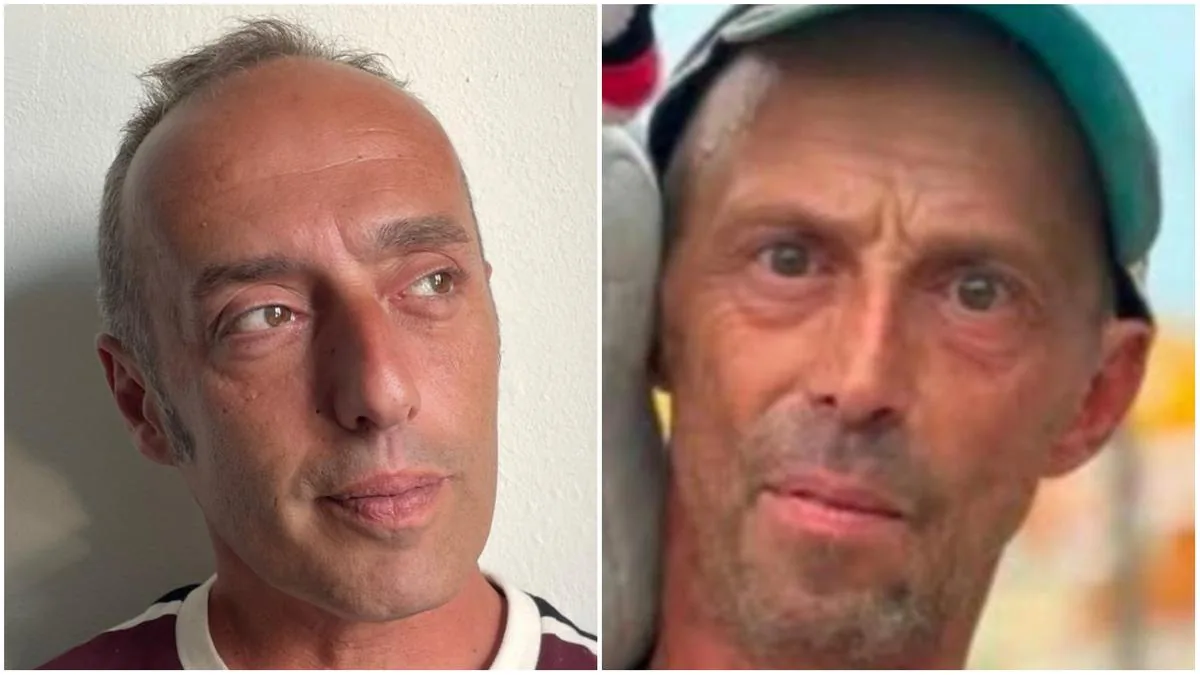
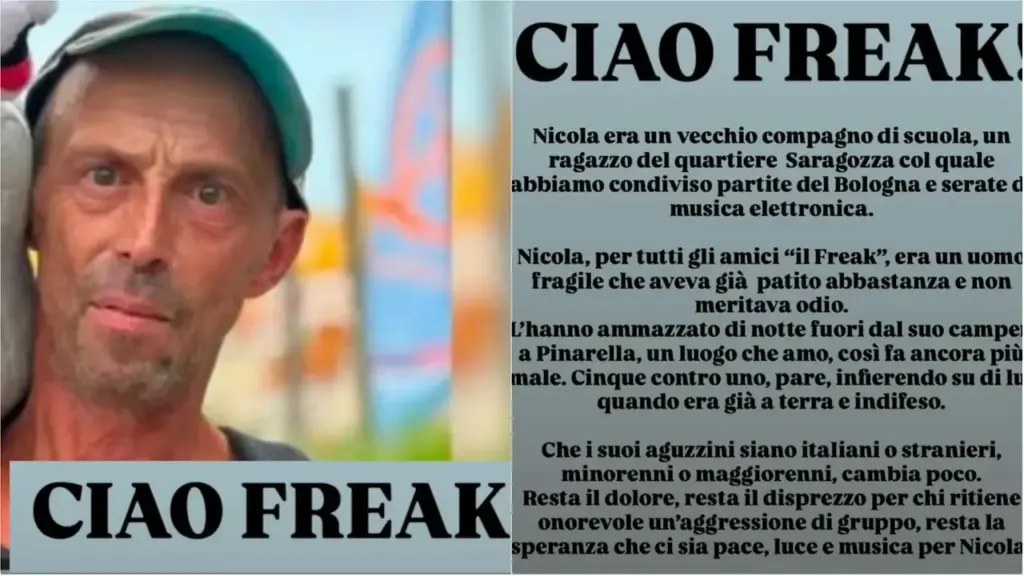
Pinarella di Cervia (Ravenna), July 27, 2026 – “Ciao Freak”. This is how the memory that Enrico Brizzi dedicated to Nicola Musiani, the 54-year-old man who died at Bufalini hospital in Cesena after four days of agony, following the violent beating that occurred in Pinarella di Cervia, begins. Dry and painful words, those of the Bolognese writer, which bring the tragedy back to its most intimate dimension: that of a face, a voice, a shared story.
Brizzi remembers Musiani as a middle school classmate, a boy from the Saragozza neighborhood with whom he had shared Bologna matches and electronic music evenings. For his friends, he was “the Freak,” a nickname that in the message becomes a greeting, memory, and affection. “Nicola was a fragile man who had already suffered enough and did not deserve hatred,” writes the author, choosing to remove the victim from crime news to restore his dignity and humanity.
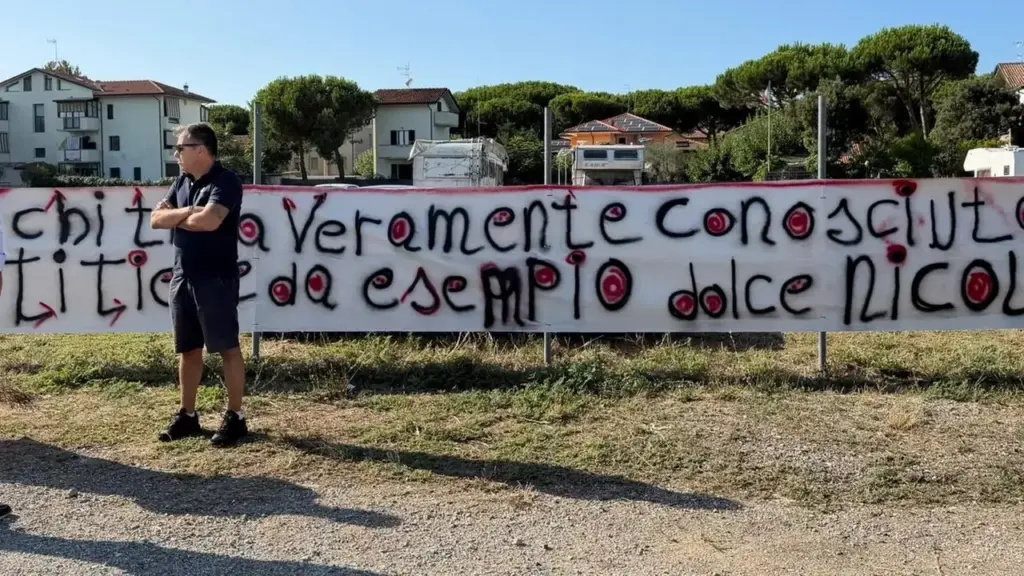
The incident has shaken all of Pinarella di Cervia
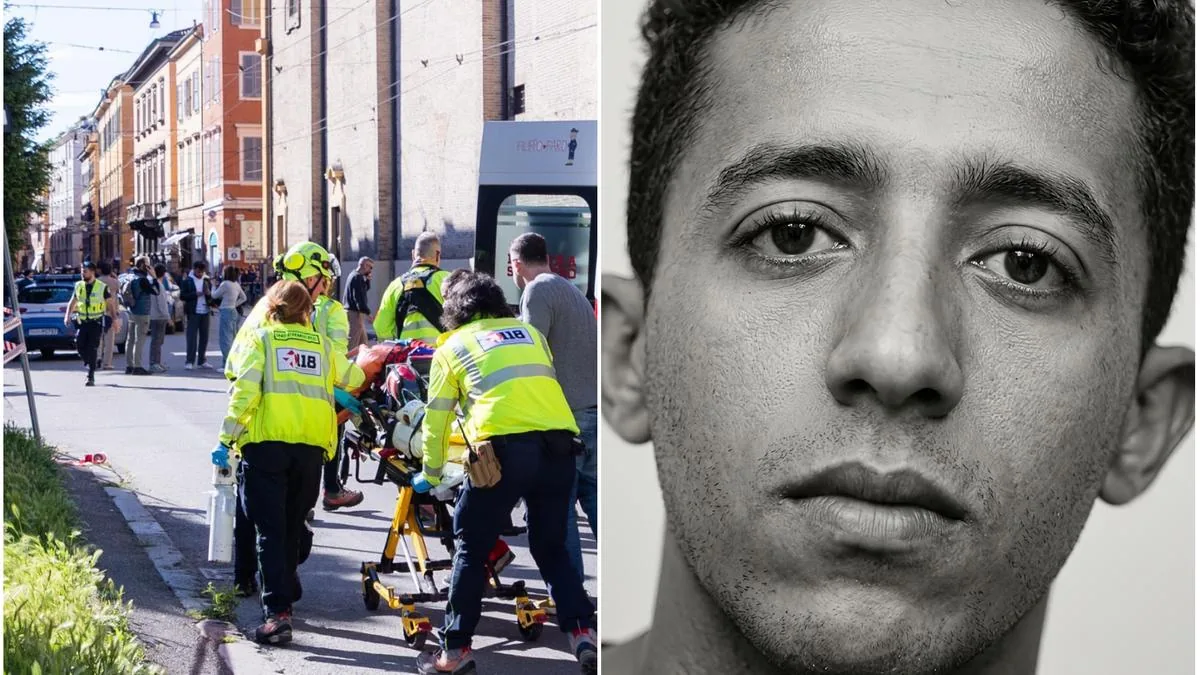
The incident has shaken Pinarella di Cervia. Musiani had been living in a camper for some time, parked in the Viale Tritone area. It was there that he was allegedly attacked on the night between Saturday and Sunday, before being found unconscious. His condition immediately appeared desperate, and the man never regained consciousness until the official declaration of death by the medical commission of Bufalini hospital.
Brizzi’s indignation on social media
In his message, Brizzi insists on the brutality of the aggression and the pain caused by the place where it all happened: Pinarella, he writes, is a place he loves, and precisely for this reason, Nicola’s death hurts even more. “Five against one, it seems, inflicting harm on him when he was already on the ground and defenseless,” are the words with which the writer expresses indignation in the face of violence perceived as cowardly and disproportionate.
“The pain and contempt for those who consider a group assault honorable remain”
The investigations, entrusted to the Carabinieri and coordinated by the Ravenna Public Prosecutor’s Office, which has opened a file for murder, aim to reconstruct the hours preceding the beating and identify those responsible. In Brizzi’s memory, however, the focus is not on the nationality or age of the alleged attackers, nor on the temptation to transform the tragedy into a confrontation. “Whether his tormentors are Italian or foreign, minors or adults, changes little,” he writes. Rather, what remains is “the pain” and “contempt for those who consider a group assault honorable.”
It is a public but also deeply private farewell from the writer: a way to remember Nicola not only as a victim of a violent crime, but as a fragile person, known, loved by those who had crossed his life. “The hope remains that there will be peace, light, and music,” Brizzi concludes. A simple farewell, almost a secular prayer, for a friend from the past who has become a symbol of a wounded community.