



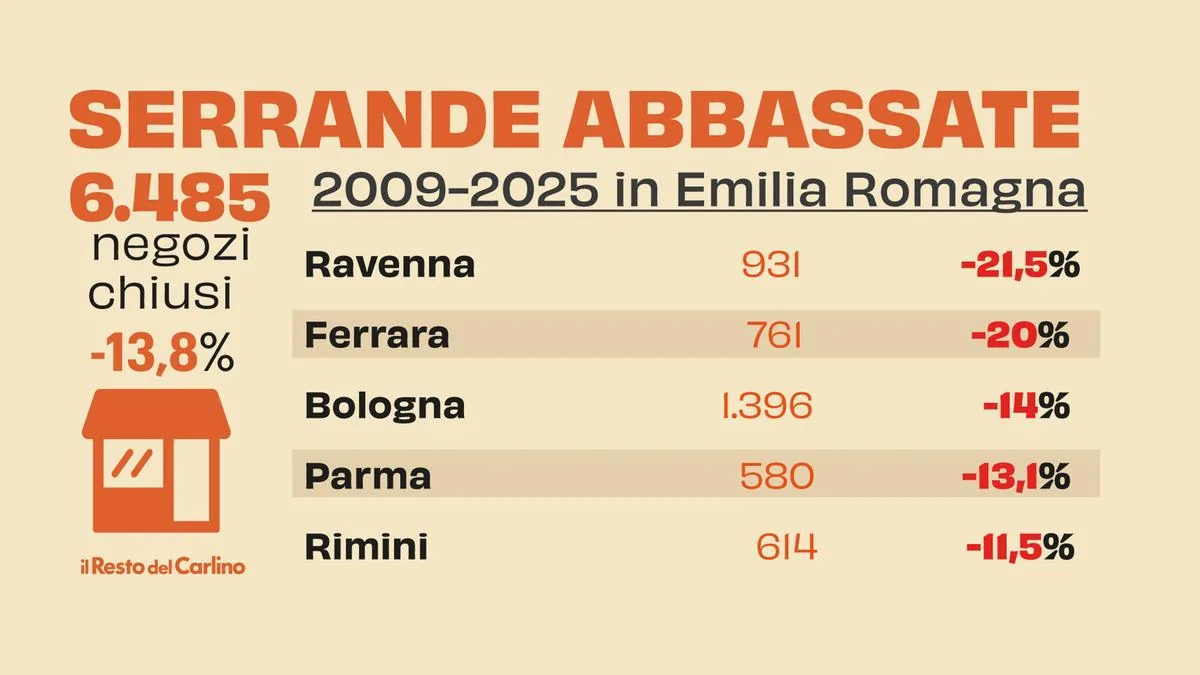
Bologna, September 17, 2026 – In Bologna, as in other major cities in the country, the agony of small businesses silently progresses amid general indifference. And to think that the proliferation of vacant spaces and changes of signage cannot go unnoticed, just like the faint lament that occasionally rises to bid farewell to yet another historic shop fallen on the field, but evidently people prefer not to face a problem that has the shape of a puzzle.

Local commerce faces its toughest challenge: tourism
Bruised by large-scale retail and its many seasons of glory, worn down by the pandemic seasons, today the so-called local commerce faces, especially in historic centers, its toughest challenge, that of tourism and its impacts. The massive influx of recent years, while on one hand has had overall beneficial effects on local economies, on the other hand, has changed geographies and structures. The idea that tourism adds and does not replace soon proved false, revealing the inertia of an approach that still relies on market self-regulation. The tiresome debate that followed, reminiscent of Gaber, about whether the ideal placement of tourism is on the right or left, reveals once again the inability to seriously reflect on the causes of the phenomena and the corrective measures to be taken.

Quantity and composition of demand have overwhelming effects on supply
Quantity and composition of demand inevitably have overwhelming effects on the supply system, a few hours of observation in one of the city center streets would be enough to understand the disproportion of forces at play. Mass tourism moves on figurative rails, represented by guides and others’ reviews, which change the shape of places, inducing many to be tempted to enter the “sell to tourists” lottery to open a commercial activity.

Tourists are almost always sold a meal or a souvenir
And tourists are almost always sold a meal or a souvenir, in a triumph of standardization and trivialization, with similar flavors now far from the original. It is evident that where that “train” passes no coexistence is possible and the only action is a belated safeguarding of the decorum of places and typical preparations. However, there is still a large slice of city corners not reviewed, where tourists rarely venture because they lack mentions in guides, from which one could try to restart, creating urban free zones, where the rules of residency and commerce are strict and those who enter are called to respect local habits. A sort of experimental laboratory to create conditions of non-belligerent neighborhood among the components, without the possibility of effective mixing. The massification of the destination is now a fact and irreversible, it is necessary to understand whether to continue to remain spectators or finally try to play a part in the play.
*Economist