








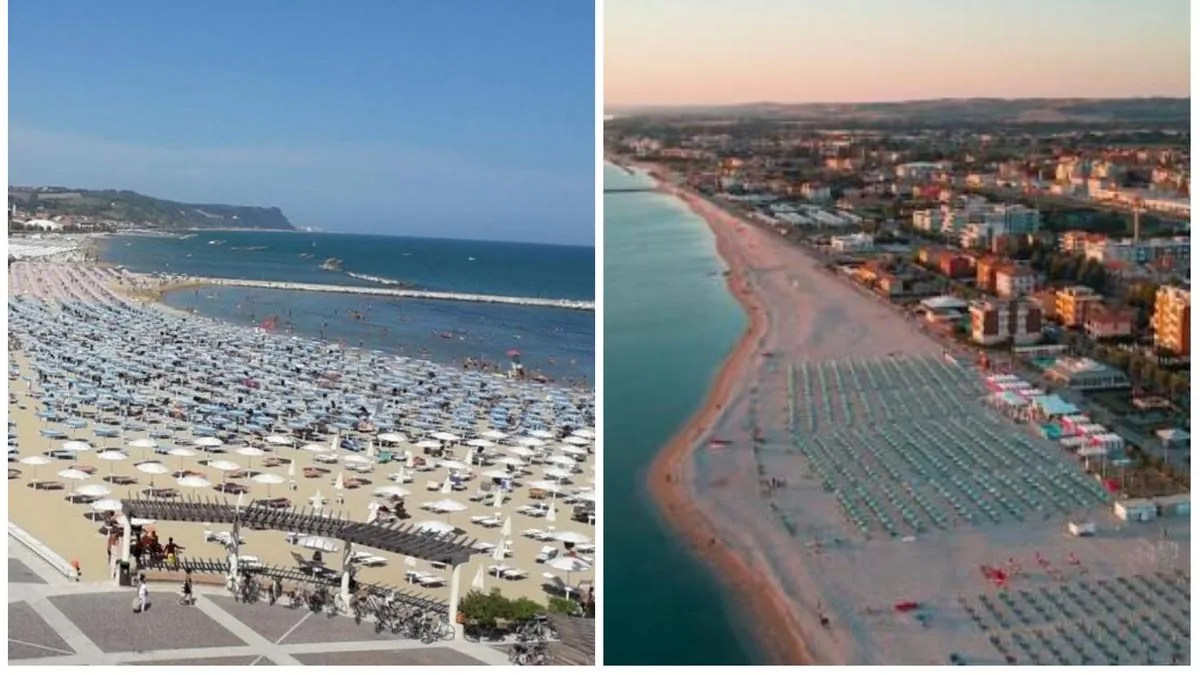
Ancona, July 13, 2026 – Same beach, same sea. But it is the last season of the old style, from next year everything changes, or at least So it is (if you think so), with all due respect to the Italian leopardism. It is the effect of the Bolkestein, beauty, the EU directive on competition that Italy has tried (in vain) to dodge for twenty years, only to end up in the quagmire of an infringement procedure. The news is that after a long and careful gestation, today Minister Salvini finally unveiled before the stakeholders (trade associations and the like) the prototype of the standard tender that should provide mayors and maritime municipalities with clear indications and rules on how to put in writing the tenders for the awarding of state property concessions. The deadline to issue the tenders is June 30 of next year, the erga omnes expiration of the concession titles will fall exactly three months later (the possible takeover by the new concessionaire will take place on October 1).
Read more The Bologna season begins: the arrival at the Valles training camp and the fans’ embrace
How the concession tender works
Compensation paid to the outgoing concessionaire, advantages or bonuses in terms of points for those who already have experience in the sector, or a related activity, even better if adjacent, a cap (or limit) on the number of lots awarded to each concessionaire, whether they are establishments, restaurants, equipped free beaches or areas for sports activities. The draft tender has been circulating frenetically for months in multiple versions (more or less updated) in beach chats from one side to the other of the 185 kilometers of the Marche coast, more than a thousand state property concessions.

The key points of the regulation
The rules, first of all. The Mit provides that concessions last from a minimum of five to a maximum of twenty years, according to EU rules, which no longer want assignments in secula seculorum or almost automatic renewals. And “the entity can set a maximum number of lots that can be awarded to the same concessionaire,” as we said, just for those who fear the binge of foreign giants taking everything. Compensation chapter. The tender must provide for its value “borne by the incoming concessionaire,” equal to that of the investments made “and not yet amortized,” or in any case to “what is necessary to guarantee the outgoing concessionaire a fair remuneration on investments made in the last five years.” And again: municipalities must indicate how the fee will be calculated and how high it can go, the amount of the provisional guarantee – to be submitted at the time of the offer – and the definitive one, to be paid instead at the signing of the concession deed.
The requirements to participate in the tenders
To participate in the tenders, one must be registered with the Chamber of Commerce and be up to date with the payment of concession fees, and obviously demonstrate “adequate solidity and solvency.” Out are those who have illegally occupied state property, likewise those who have used undeclared work.
Read more The Vannacciano mayor: «No to do-it-yourself justice. But citizens feel insecure and want answers»
Bolkestein, the criteria of the tenders
The selection will take place according to the principle of the most economically advantageous offer, “identified based on the best quality-price ratio.” But bonuses ad hoc established in each tender will also have an impact, for example for SMEs or companies that apply social clauses to guarantee job stability. The concession goes to the one with the highest score, and so far no doubt about it. More complex is the scoring mechanism.
The score to win the tenders
The technical offer weighs 90%, the other 10% is linked to the economic offer, which gains points in relation to the increase on the compensation to the outgoing concessionaire and on the fee. The technical offer will evaluate structural quality, functional continuity, sustainability, social policies, de-seasonalization, technical-professional capacity, subjective reliability of the bidder. Bonus for those who already have experience in the sector, likewise if the concession is the main source of income or if it is a small family business. “The tender scheme has been the subject of extensive discussion to arrive at the definition of the final document as soon as possible – the Mit reports –. It is an intervention that will accompany the renewal of concessions and aims to overcome current critical issues through the definition of shared and uniform rules.” By July 23 the standard tender will return to the State-Regions Conference, then a second round at the Mit with trade associations. And yet it moves…