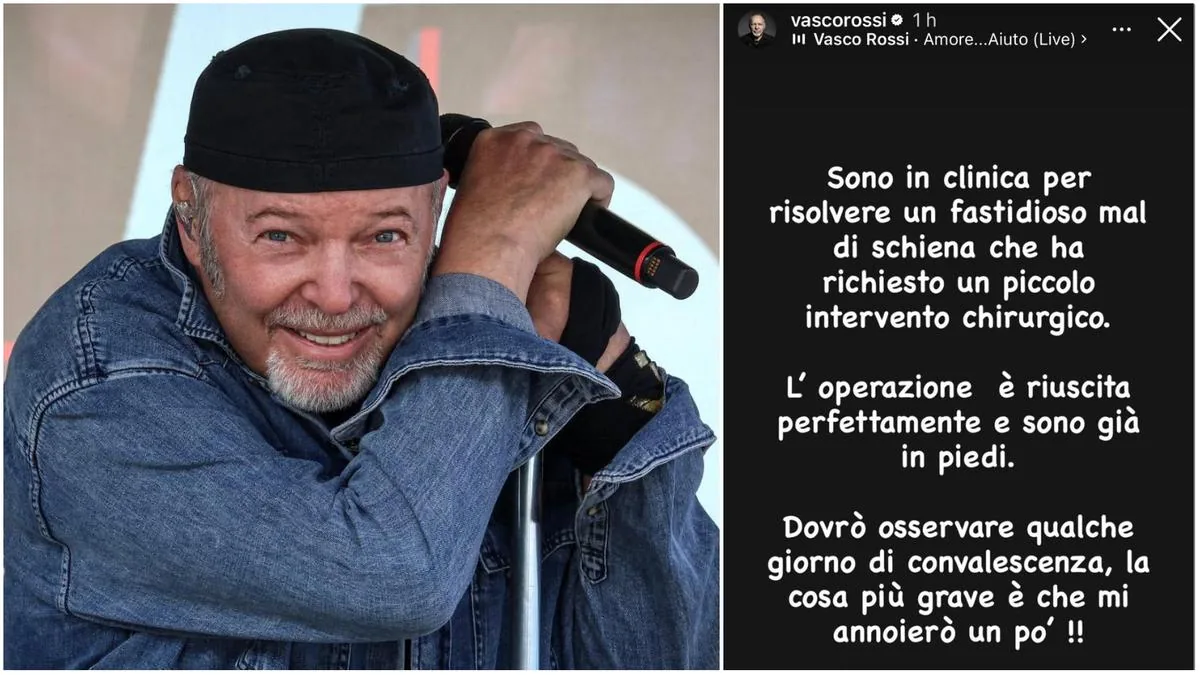








Bologna, August 27, 2026 – A thunderstorm in Sardinia, a sports field, a concert canceled, and the interior of a car transformed into the nest of an epochal intuition. A twist of fate from which was born, 44 years ago in Cagliari, the myth of Vita Spericolata. Today, the genesis of this never trivial story is recalled by Vasco Rossi himself, who, relying on a post on social media, shared an intimate and powerful memory of how a song “came out of my soul.”

How Vita Spericolata Was Born
It was 1982. That evening the bad weather gave no respite: “I had to do a concert – writes Vasco – We were stuck in the rain in front of a sports field, we couldn’t even rehearse and I was locked in the car.” But precisely in that moment of forced waiting, the magic happened: “Suddenly the illumination came.” A flash, not in the sky.
For months the rocker had been searching for the right words to dress a melody by Tullio Ferro that tormented him. In that car soaked by rain, here is the first verse destined to remain engraved in the history of Italian music: “’I want a life…’”. From that spark, the rest flowed like a raging river: “rude,” “reckless,” “one of those where you never sleep.” Vasco began to dig inside himself, giving voice to a visceral feeling that “at that time afflicted everyone: the fear of a flat, quiet life, devoid of emotions.”

The Historical Context
The historical context was crucial. “It was a song born from the probably naive optimism hangover of the Eighties – emphasizes Blasco in the post – which came after the great illusion of the dream of being able to change the world or at least the system that put merchandise, profit, consumerism, advertising at the center, instead of man.” In the background remained the still open wounds of the previous season, characterized by the “defeat of the Seventies and the delirium of the Red Brigades.” But then: who doesn’t want a reckless life at 30? A life full of adventure…”.
The Return to the Sanremo Festival
After shaking the Ariston in 1982 with Vado al Massimo, Vasco returned to the Sanremo Festival the following year precisely with Vita Spericolata, turning it into a generational manifesto. Yet, the deep meaning of those words was often misunderstood.

For the Komandante, in fact, it is “one of the most misunderstood songs in the history of humanity – he clarifies in conclusion – it is an anthem to life lived recklessly, in the sense of intensely, with enthusiasm, with strength.” Thus, 44 years after that afternoon under the Sardinian rain, Vasco Rossi gives his fans not only a piece of music history but also a reflection still very relevant on what it really means to live fully.