
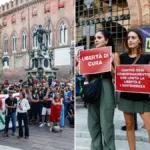
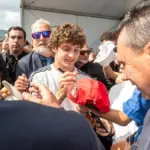
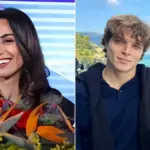


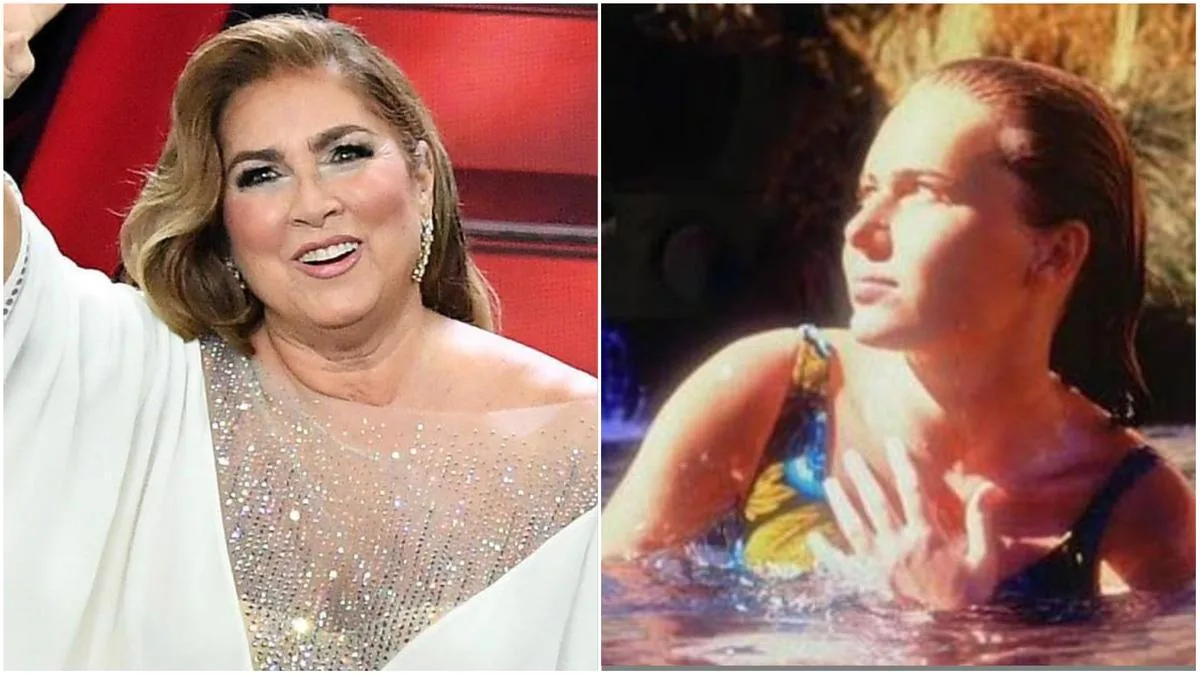
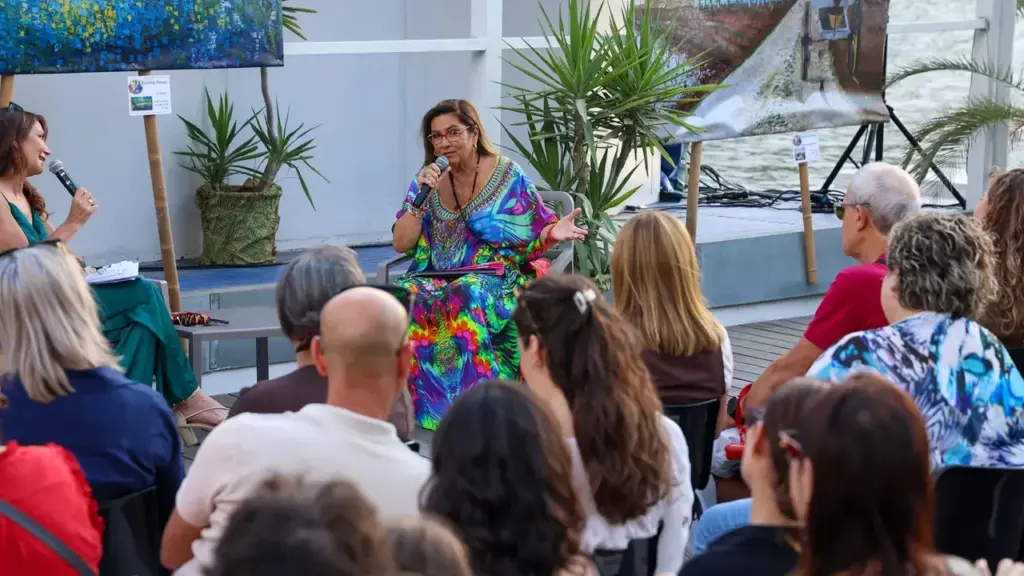
Ferrara, July 14, 2026 – It was a big embrace that the Darsena di Ferrara gave to Romina Power on Saturday, in the city among her paintings and the presentation of her latest book, sharing her story. Had she been to the city before?
“Yes, I hadn’t managed to visit museums but I do remember an excellent restaurant.”
From great fame, between cinema and music, she then chose a more reserved life. What led you to this change?
“The need for tranquility. I found a place where silence and peace reign. Feeling good there, I also find inspiration to write and paint. I don’t miss anything from that previous period. I appreciate the tranquility I have found now.”
In which form of art do you feel most free?
“In writing and painting. Because there are no constraints nor the intervention of other people: these are activities that can be done completely alone.”
How does the inspiration for your paintings arise?
“I don’t paint with the intention of sending messages. I paint because I love to do it. I see a glimpse, something I want to fix on the canvas. I like large canvases because they are like big windows that open the room and allow you to look towards infinity.”
And your relationship with writing?
“It goes back to the times at boarding school in England, where we were encouraged to write short stories and poems. Sometimes, during shows, between one pop song and another, I recite some. This also gives me a great sense of freedom, because I write when inspiration comes.”
Is that where Romina emerges?
“Yes, probably a lesser-known part. I am also a rather shy person, although I love being among people, and maybe I haven’t done much to really make myself fully known. When I decided to write ‘Deeply Simple Thoughts’, I realized I had reached three-quarters of my life and thought that if I didn’t share my thoughts now, it might be too late.”
Like the book you presented in Ferrara?
“There I collected my thoughts on various topics following an alphabet, which is also the subtitle of the book: ‘The Alphabet of My Life’. Instead of writing a chronological biography, I preferred to tell my story through words and reflections. It also contains stories related to my life. I talked about the adoption of the four children in India, my animals, and other moments. With this book, the reader can also get to know my most intimate side.”
I was very moved when Tiziano Ferro told me he played Ballo del Qua Qua for his children
What do you feel when you meet people during your book presentations like this one in Ferrara?
“I really like this direct contact. On stage there is the audience that follows you and applauds, but the real closeness is different: few manage to get all the way to the dressing room. On these occasions, instead, during meetings and book signings, I really feel the affection of the people. It is something tangible. I like to look them in the eyes, hug them, get to know those who maybe have followed me for many years but never had the chance to get close. I perceive sincere affection. It’s as if we really were part of the same family.”
Speaking of music, which of your songs are you most attached to?
“The lesser-known ones, those that almost never play on the radio. Especially those from the 70s, when I was very musically inspired.”
From those years, a big hit was ‘Acqua di mare’…
“It was played on all jukeboxes in Italy and in fact that year I won the Festivalbar Giovani. But I didn’t enjoy it, because I spent the whole summer in bed with viral hepatitis. It was my first big success, but unfortunately I couldn’t live it. It’s a song that always gives me a nice emotion. As soon as that electric guitar intro starts, it immediately grabs you. Sometimes I also watch the video again: they made me walk on the rocks, at night, with the waves crashing hard. It was really risky and every time I watch those images I get chills.”
Instead, from ’82, Ballo del Qua Qua. How does it feel to hear this now-historic song still sung today?
“I was very moved when Tiziano Ferro told me he played Qua Qua for his children. Thinking that this song continues to live through new generations is really beautiful.”
How much has spirituality helped you, especially in the most difficult moments?
“A lot. When I moved to the United States to care for my mother in the last years of her life, in Palm Springs, I accidentally discovered a Buddhist center. It was there that I began to meditate and follow the teachings of Buddhism. The community, the Sangha, was also a very important support during that difficult period.”
Pains like that for Ylenia, with time passing: where do you find strength?
“Time, sometimes, is not important. A mother’s hope never dies, no matter how much time passes. And I practice meditation. I feel that she is still alive. It is said that the umbilical cord between a mother and a child is never completely cut…”