









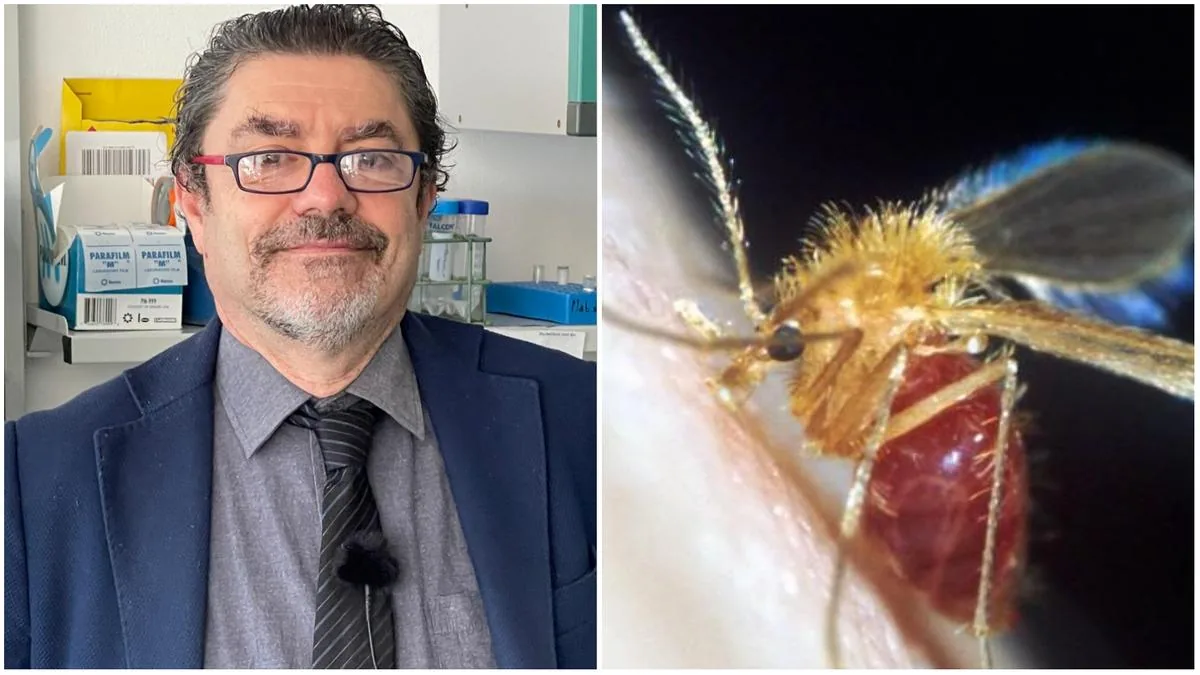
Morrovalle, July 23, 2026 – A case of Toscana virus infection has been confirmed in Morrovalle. What is it? Professor Guido Favia, professor of parasitology at the School of Biosciences and Veterinary Medicine and pro-rector for research at the University of Camerino, explains. “The detection of Toscana virus cases should not cause particular alarm – he prefaces -. The virus has been present in our country for some time and in most people causes a mild or even asymptomatic infection.” But in a small percentage of cases, the virus can affect the central nervous system, causing neuro-invasive forms, such as meningitis or meningoencephalitis. Here are the recommendations. Professor, how is the virus contracted? “The Toscana virus is transmitted through the bite of phlebotomine sandflies, small blood-feeding insects commonly called sandflies. Transmission occurs during the blood meal taken by females, who bite to complete egg development.” What are the symptoms? “Most human infections are asymptomatic or have mild symptoms. When present, the most common manifestations are fever, headache, general malaise, nausea, and sometimes vomiting. Onset is generally sudden and, in most cases, symptoms resolve spontaneously within a few days without the need for specific therapy. In a small percentage of cases, the virus can affect the central nervous system, causing neuro-invasive forms, such as meningitis or meningoencephalitis. Peripheral neuropathies have also been described more rarely.”
“The risk is limited to a febrile illness, but in a minority of cases, neurological complications can develop”
In which areas does it develop? “The Toscana virus is present in several countries of the Mediterranean basin and is considered an emerging pathogen from a public health perspective, not so much because it is a new virus, but because epidemiological and diagnostic attention towards it has increased in recent years. In Italy, cases are reported with a certain regularity, especially in the central-southern regions, although its actual spread is probably underestimated. The Marche region is among the Italian regions where cases of Toscana virus infection have been notified as part of national surveillance. Therefore, one cannot speak of a first appearance of the virus in the regional territory, even if it is a relatively infrequent infection and probably underdiagnosed. It is important to emphasize that, despite being an emerging virus, severe forms are relatively rare and most infections run their course without symptoms or with a mild febrile syndrome.”
Read more The Pope visits Rimini on August 22, how to participate in the mass: the rules
“The infection can affect people of all ages, including children”
What are the risks for humans? “For most people, the risk is limited to a short-lived febrile illness or even an asymptomatic infection. However, in a minority of cases, especially in vulnerable individuals, neurological complications requiring hospital care may develop. It is important to emphasize that the detection of Toscana virus cases should not cause particular alarm. The virus has been present in our country for some time and in most people causes a mild or even asymptomatic infection.” Does it affect all ages? What are the effects on children? “The infection can affect people of all ages, including children. According to Italian epidemiological data for the period 2016-2021, the average age of cases was 46 years (range 0-89 years), with a higher frequency in the age group between 20 and 59 years. In children, the infection is generally mild or asymptomatic, although, as in adults, neurological forms are possible, fortunately infrequent.” How is it treated? “There is no specific antiviral therapy. Treatment is supportive and primarily symptomatic, including rest, adequate hydration, and, if necessary, antipyretic and analgesic drugs to control fever and pain. In cases with neurological involvement, hospitalization may be necessary.” What to do to prevent it? “Currently, no vaccines or specific preventive therapies are available. Prevention is therefore mainly based on avoiding sandfly bites. It is advisable to use skin repellents, wear clothing that covers arms and legs. Unlike mosquitoes, sandflies are very small insects, with a silent flight, active mainly from dusk to dawn. For this reason, in addition to using repellents, it is important to limit exposure during evening hours and use very fine-mesh mosquito nets, as phlebotomine sandflies are significantly smaller than common mosquitoes and can pass through nets with too wide meshes.”