



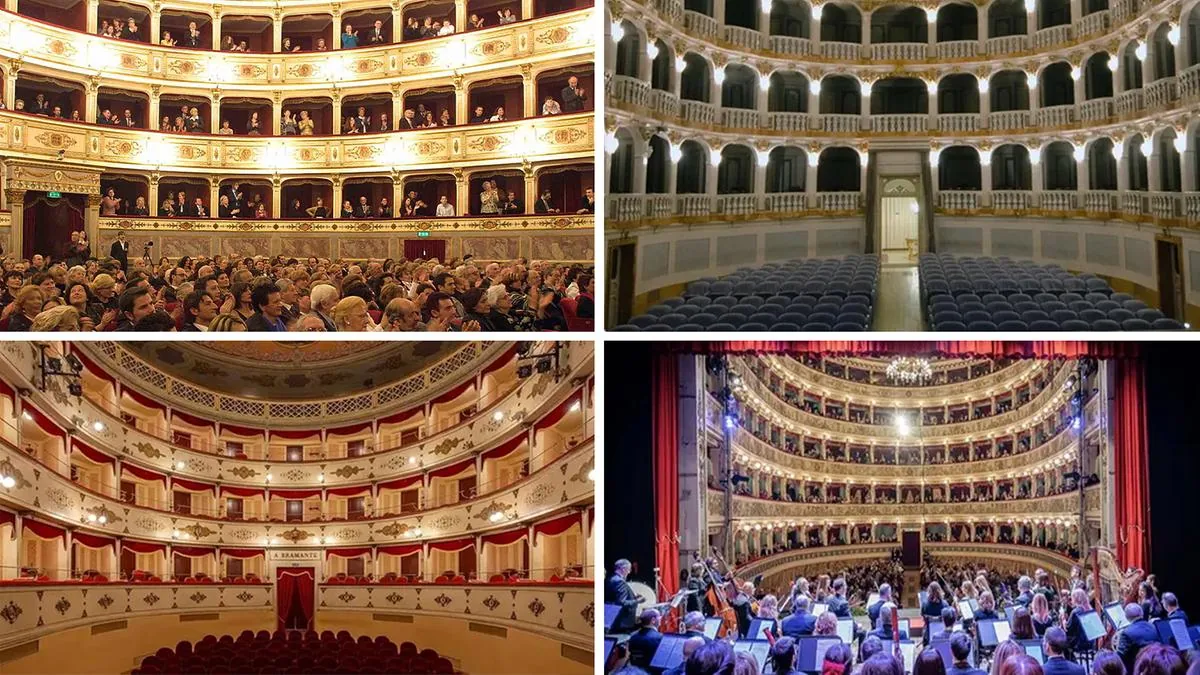
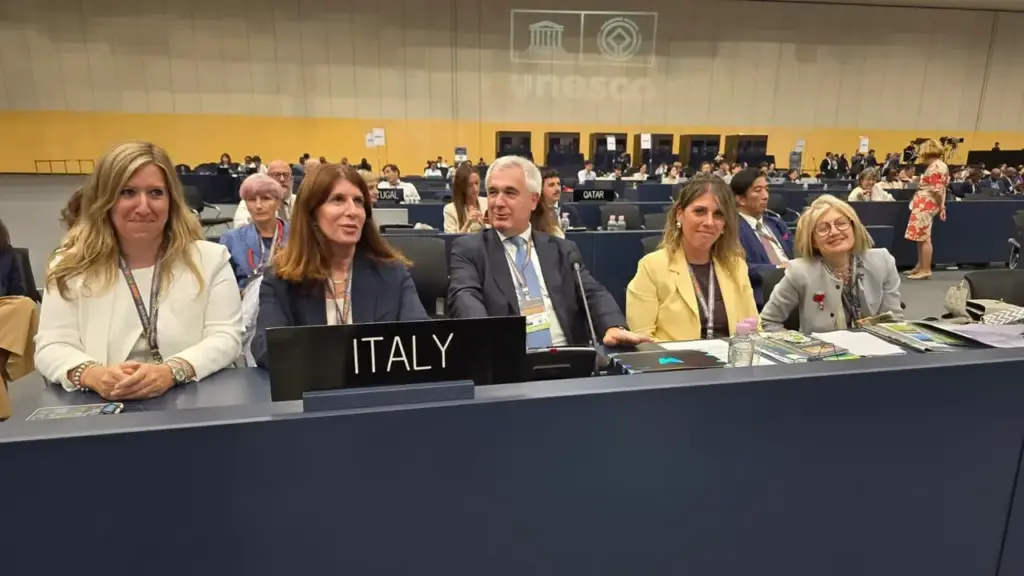
Ancona, July 26, 2026 – Condominium theaters of central Italy recognized as Unesco World Heritage. In Busan, South Korea, the 48th session of the Unesco Committee inscribed the site ‘The system of Italian-style condominium theaters of central Italy of the 18th and 19th centuries’ promoted by the Marche Region, with the involvement of the Emilia-Romagna and Umbria Regions, on the World Heritage List. The new recognition brings the number of Italian sites inscribed on the Unesco List to 62, consolidating Italy’s primacy in the number of recognized assets.
The serial site
It is a serial site: not a single monument, but a set of 10 historic theaters distributed between Marche (8), Emilia-Romagna (1) and Umbria (1), united by a shared origin and history. Among these, the Teatro Mariani (Rimini), the oldest wooden theater in Italy, made famous by the visit of Vittorio Gassman, who recited the Divine Comedy there for Rai and was struck by it.
The list of inscribed theaters
1. Teatro Angelo Mariani, Sant’Agata Feltria
2. Teatro Pergolesi, Jesi
3. Teatro Ventidio Basso, Ascoli Piceno
4. Teatro Serpente Aureo, Offida
5. Teatro dell’Aquila, Fermo
6. Teatro Lauro Rossi, Macerata
7. Teatro Feronia, San Severino Marche
8. Teatro Gentile da Fabriano, Fabriano
9. Teatro Bramante, Urbania
10. Teatro Nuovo Gian Carlo Menotti, Spoleto
Minister Giuli: “Pride and satisfaction”
“We welcome with pride and satisfaction the decision of the Unesco World Heritage Committee to inscribe the condominium theaters of central Italy on the World Heritage List”. This was stated by the Minister of Culture, Alessandro Giuli. “The recognition celebrates the exceptional universal value of these architectural jewels, which have been, for over two centuries, vital centers of cultural enjoyment, identity, and social cohesion for the communities that preserve them. Condominium theaters are an excellent Italian cultural infrastructure, which, in an innovative way, has allowed generations of citizens in the villages and small towns of central Italy to enjoy Opera, classical music, and other forms of live entertainment”.
The Marche’s achievement
The Marche region achieves an extraordinary and unique milestone in the process of enhancing its artistic, cultural, and architectural heritage: the Unesco recognition of the condominium theaters of central Italy definitively consecrates the ‘region of theaters’. An extraordinary result, fruit of a very important work carried out in recent years, which represents a further, prestigious international recognition of the cultural identity of the Marche.
Governor Acquaroli: “Great emotion, historic result”
“A reason for enormous pride, a great emotion and a historic result for the Marche and for the entire regional and national theatrical and cultural system – declares the president of the Marche Region Francesco Acquaroli – This recognition confirms the universal value of a unique heritage in the world and strengthens the identity of the Marche as a region of theaters, a territory where the highest density of condominium theaters in the world is concentrated. The inscription of the serial site on the World Heritage List will support the entire regional network of condominium theaters in the enhancement process initiated with the Unesco candidacy. Today we write a historic page that stems from a long and rigorous institutional work and that will bring international attention to the entire network of historic theaters scattered throughout the Marche territory and consequently to our entire Region”.
The process initiated by Giorgia Latini: “Fulfillment of a dream”
The process was initiated by Giorgia Latini, vice-president of the Culture Commission of the Chamber and regional secretary of the Lega Marche, first as regional councilor for Culture and subsequently through a parliamentary motion in support of the candidacy, approved by the Italian Parliament and later adopted by the Government. “The Unesco recognition of the historic theaters of the Marche is the fulfillment of a dream that, for many, seemed unattainable and which today finally becomes reality. – commented Latini – The Marche is a small region, but it preserves an extraordinary network of Italian-style historic theaters, unique in density and quality. The Unesco recognition goes beyond the artistic and architectural value of our theaters. This is not just a victory for the Marche. It is a victory for Italy, because it is the candidacy that the Italian Government chose to present to the world, recognizing its universal value. A success that makes our entire country proud and demonstrates that investing in culture means investing in our identity and our future. Today the Marche writes a new page in its history. From today the world will know even more about the beauty, culture and identity of our land”. I
Undersecretary Luconi: “Recognition that enhances the entire network of Marche theaters”
“A recognition that enhances the entire network of Marche theaters, stemming from a rigorous evaluation process of a certainly complex serial site that began in 2020 – said Undersecretary Silvia Luconi -. The Italian-style theaters, with the Marche as leader, represent our history, our identity, the testimony of the architectural value contained in wonderful places that are the beating heart of our communities. The inscription on the World Heritage List does not represent an arrival point but the beginning of a renewed commitment to the protection, conservation, and transmission of the values contained in this widespread heritage that we are fortunate to preserve in the Marche. A very strong message emerges: that of the importance of international cooperation, dialogue between cultures, and shared responsibility in safeguarding the assets that testify to the richness and diversity of our civilization”.
The condominium theater formula
The Marche region boasts a concentration of historic theaters unique in the national landscape. Spread across the region’s villages and cities, these buildings were constructed between the 17th and 19th centuries according to the peculiar formula of the condominium theater, financed through the purchase of boxes by local families. For centuries, they have represented not only places of entertainment and culture but also drivers of economic, social, and identity development for communities. Born through the direct participation of citizens, who shared ownership, management, and use, they made a decisive contribution to the growth of cultural and social life in the territories. They constitute a widespread heritage, made up of buildings of refined elegance and a civic tradition that has transformed the theater into a distinctive element of community identity.
Read more Captured the large lizard that was wandering in the park: it’s a Red Argentine Tegu
The importance of the recognition
The Unesco recognition constitutes an opportunity in multiple aspects: it strengthens the international visibility of the Marche cultural heritage, favors new protection and conservation actions, increases the tourist attractiveness of the territories, and promotes research, study, and training activities.
The Mayor of Macerata: “The Lauro Rossi is the beating heart of our social identity”
“We are writing an important page for the history of our city, province, and the Macerata community – comments the Mayor of Macerata Sandro Parcaroli –. The inclusion of the Lauro Rossi theater in the Unesco World Heritage List is an extraordinary success that fills us with pride and projects Macerata to the center of the international cultural scene. This achievement demonstrates the strength of a territory capable of working together and enhancing its excellences. The Lauro Rossi is not only a masterpiece of eighteenth-century architecture, but it is the beating heart of our social identity and our theatrical tradition. From today, this temple of culture belongs to all humanity: our responsibility will be to preserve it with even greater care, enhancing artistic programming and attracting quality international tourism”.
The Mayor of San Severino: “The Feronia theater is a place where history meets the future”
Satisfaction and deep pride are also expressed by Rosa Piermattei, Mayor of San Severino: “This recognition rewards the care, protection, and constant enhancement of our cultural heritage. The Feronia theater is a place where history meets the future. We will continue to work with dedication so that this temple of art continues to be a beacon of growth and social cohesion for all our fellow citizens and visitors”. “Entering the Unesco heritage is the definitive consecration of the artistic and historical greatness of our Feronia – adds the Director of Theaters Francesco Rapaccioni -. A season of great opportunities for the international promotion of our cultural activities and the entire territory now opens”.
The President of Emilia Romagna de Pascale and Allegni: “A recognition that further enhances an extraordinary richness”
Also on the list is the Teatro Mariani Sant’Agata Feltria (Rimini), the oldest wooden theater in Italy. A place that has spanned three centuries without losing its essence. “This recognition fills us with pride and gratitude – state the President of the Region, Michele de Pascale, and the Regional Councilor for Culture, Gessica Allegni -. The Teatro Mariani of Sant’Agata Feltria today becomes part of the heritage of all humanity, and with it enters the history, tenacity, and sensitivity of a community that has known how to preserve this jewel for centuries”.
“Alongside the Mariani, in the candidacy process – explains a note from the Region – the Teatro Goldoni of Bagnacavallo (Ra) had also been initially included, named after Carlo Goldoni, whose father had practiced as an assistant general practitioner in the town and which still preserves the valuable tempera-painted curtain by Antonio Muzzi. Following the technical evaluation conducted by Icomos — the official advisory body of Unesco for the conservation of world cultural heritage — the theater, like 6 others in the Marche and 1 in Umbria proposed in the candidacy dossier, was not included in the final composition of the inscribed serial site. The reasons, exclusively technical-conservative in nature, concern certain aspects related to the criteria of authenticity and integrity that the commission applied to the entire set of candidate theaters, evaluating the overall coherence of the site”.
Undersecretary for Culture Borgonzoni: “Great satisfaction”
“An extraordinary recognition of the architectural, urban, and cultural quality of central Italy between the 18th and 19th centuries. I have followed and promoted this candidacy since 2021, at the time as Undersecretary with responsibility for Unesco, convinced that the network of our historic theaters, born from the collaboration between institutions and local communities, is a unique identity model in Europe”. So in a note, the Undersecretary for Culture Lucia Borgonzoni. ”Ten Theaters that tell the story of the evolution of Italian-style theater, from the horseshoe-shaped hall to superimposed boxes, up to advanced scenographic and acoustic solutions. They bear witness to a civil revolution, that is, the transition from court entertainment to an open civic institution, capable of fostering dialogue between different social classes in the same place of entertainment. Unesco today recognizes not only the beauty of these buildings but also the continuity of use that has kept them alive for three centuries lthanks to the care of the communities. It is a choral heritage distributed among Marche, Umbria, and Emilia-Romagna, regions that have known how to work as a team, demonstrating that the seriality of the site enhances the network of relationships between the Theaters and their historic centers. Protection, programmed maintenance, technical training, and coordinated enhancement will be the keywords of our commitment, to transmit to future generations a theatrical system that has influenced architecture worldwide. I thank the Unesco offices of the Ministry of Culture for the work carried out in recent years with care and dedication”, she concludes.
Read more Demonstration for Fakir, hundreds for the ‘popular march’ to Pilastro: live from Bologna